

Good is Jehovah to the one hoping in him, to the soul that keeps
seeking for him.
Good it is that one should wait, even silently, for the salvation of
Jehovah.
―Lamentations 3:25,26
 
|


"And I have other sheep, which are
not of this fold; those also I must bring, and they will listen to my
voice, and they will become one flock, one shepherd."
—John
10:16
To whom do Jesus' words at John 10:16 apply? Who are the "other sheep"? Was Jesus foretelling a development that was going to be fulfilled perhaps 2000 years in the future; or was he referring to prophecies that were about to be fulfilled within a few short years, after his death and resurrection? Consider Jesus’ words at Luke 24:46,47, when he said, “You can see now how it is written that the Messiah suffers, rises from the dead on the third day, and then a total life-change through the forgiveness of sins is proclaimed in his name to all nations -- starting from here, from Jerusalem!” (MSG)
Jesus was saying that the good
news of the kingdom of God would be preached, not only to the Jews, but also to
all the nations. How different this would be from that first occasion,
when he sent forth his twelve apostles to preach the good news of the kingdom
and specifically instructed them, "Go nowhere among the Gentiles and enter no
town of the Samaritans, but go rather to the lost sheep of the house of Israel.
And proclaim as you go, saying, ‘The kingdom of heaven is at hand.’" (Matthew
10:5-7, ESV) Yes, the nations too would hear the good news of the
kingdom. Jesus had already indicated that fact when he had told Nicodemus: "For
God loved the world so much that he gave his only Son, so that everyone who
believes in him may not die but have eternal life." (John 3:16, GNT;
compare John 6:50-51)
On what basis have we been taught that the "other sheep" of John 10:16 is
identified with the "great crowd" of Revelation, that comes out of the
great tribulation and receives everlasting life on earth? (Rev. 7:9-10,
13-17)
The Origin of Our
Present Understanding
How did we come to believe that the “other sheep” of John 10:16 refers
specifically to those who will live on earth? The book Isaiah’s
Prophecy--Light for All Mankind II, published in 2001, said the
following under the heading “A Great Crowd Runs to God’s Anointed”:
"Jesus’ disciples entertain one of two hopes. First, a “little flock” numbering 144,000 has been gathered—anointed Christians of both Jewish and Gentile backgrounds who are “the Israel of God” and have the hope of ruling with Jesus in his heavenly Kingdom. (Luke 12:32; Galatians 6:16; Revelation 14:1) Second, in the last days, “a great crowd” of “other sheep” have manifested themselves. These have the hope of living forever on a paradise earth. Before the outbreak of the great tribulation, this multitude—whose number is not foreordained—serve alongside the little flock, and both groups form “one flock” under “one shepherd.”—Revelation 7:9, 10; John 10:16. (ip-2 chap. 16 pp. 241-242 A Message of Hope for Downhearted Captives)
We should note here that until 1932 all baptized Jehovah’s witnesses were expected to partake of the Memorial emblems. (The name was adopted in 1931) In 1932 it was explained that there was a class of persons who were not considered Jehovah’s witnesses but had the “privilege” to associate with them and they had the hope of enjoying everlasting life on earth. They were referred to as the Jonadabs, who, it was believed, were prefigured by King Jehu’s associate Jehonadab (Jonadab). —see The Watchtower, August 15, 1934, page 249; also Proclaimers book, page 83 Footnote.
Starting with the April 1, 1935
issues of The Watchtower there was this announcement: “Again The
Watchtower reminds its readers that a convention of Jehovah’s witnesses and
Jonadabs will be held at Washington, D.C., beginning May 30 and ending June
3, 1935.” (Bold added) The Proclaimers book states that “the Jonadabs eagerly awaited
the convention.” At this “historic” convention,
Judge Rutherford explained that the “great multitude,” foretold in Revelation
7:9-17, was made up of “the modern-day Jonadabs and that these Jonadabs had to
show the same degree of faithfulness to Jehovah as the anointed.” (Proclaimers
book, page 84) It was not until the July 1, 1942 issue of The Watchtower
that the Jonadabs were also considered to be Jehovah’s witnesses; and the term
“Jonadabs” was eventually replaced with the designation “other sheep.”
Why were the “Jonadabs”
originally not viewed as Jehovah’s witnesses? For the same reason they
were referred to as Jonadabs. Much of the understanding in
those years—and right up until the 1970’s—was based on prophetic
patterns or parallelism, as explained in The Watchtower, of August 15, 1972
said:
”Another thing that has given rise to questions is the use by Jehovah’s witnesses of parallels or prophetic types, applying these to circumstances and to groups or classes of people today. Many people who read the Bible view its accounts all as simply history, but when they begin to study with Jehovah’s witnesses a readjustment of viewpoint takes place as they see that there is more to the accounts than history.” (pages 502-504, God Readjusts the Thinking of His People.)
In connection with this reasoning, the explanation concerning the Jonadab class goes like this:
“We are living through developments of history
that parallel the situation in Jehonadab’s time ... Just as Jehu of old
separated the true worshipers to be preserved from the worshipers of Baal to be
executed, so the Greater Jehu today is identifying persons either for
destruction or for preservation. How so? By their response to the message
concerning God’s kingdom, which God is having preached “in all the inhabited
earth as a witness to all the nations.” (Matt. 24:14) In this way, those who
reject God’s kingdom by Christ are identified as Jehovah’s enemies just as
clearly as were those worshipers of Baal who put on their religious vestments.
"Well, then, where do you stand? Is your heart upright toward God, as was
Jehonadab’s? Remember, Jehonadab actually got into the chariot and rode with
Jehu. He thereby publicly declared his support for the righteous executional
work in which Jehu was engaged. Are you similarly in heart harmony with the
executional work of Jesus Christ? Have you publicly declared that support?” —
w68 6/15 pp. 358-359 A Man Whose Heart Was Upright
Does that reasoning sound logical? More importantly, does it find support in the Scriptures? According to this “prophetic parallelism”, Jehu―who was anointed as king by Jehovah―pictures Jesus, and by extension the anointed 144,000 co-rulers of his. On the other hand, the non-Israelite and non-anointed Jehonadab―who joined Jehu in his chariot as he rode against the worshipers of Baal―pictures the "Jonadab class", later more popularly referred to as “the other sheep” of John 10:16. Also, consider what the book Isaiah’s Prophecy—Light for All Mankind II, says regarding this:
“In 1932 a deeper understanding of the prophetic drama of King Jehu of Israel and Jehonadab, a non-Israelite supporter, indicated how these other sheep act in support of Christ’s anointed brothers—just as Jehonadab went along and supported Jehu in his destruction of Baal worship. Finally, in 1935 the other sheep living during the time of the end of this system of things were recognized as being the great crowd seen in vision by the apostle John. This was first explained at the aforementioned convention in Washington, D.C., when Joseph F. Rutherford pointed to those with an earthly hope as ‘the great multitude.’” (chapter 17, pages 253-254; italics added)
As we can see in the above quotes, there are no Scriptures offered in support of their "deeper understanding". That is because there are no Scriptures that make a distinction between “the other sheep” and the "little flock" of Christ's followers. This teaching is based entirely on “parallel" or "prophetic type” interpretation, as Rutherford understood it. Therefore, it is highly significant that in 2015, the Watchtower officially distanced itself from the unscriptural theory of types and antitypes. Yet, up to the present day, the governing body of the Watchtower corporation continues to cling to the many teachings that are founded on that now discarded interpretation of the Scriptures. (See The Watchtower 2015, March 15, pages 17-18)
Does it really matter who the
“other sheep” are? Yes, very much so, because many of our teachings are based on
Rutherford's erroneous explanation of the identity of the other sheep. For
example, the teaching regarding the new covenant that excludes the other sheep;
likewise with Jesus’ mediatorship; and how we celebrate the memorial as
commanded by Jesus; also our reconciliation to God; etc., etc. By
making a distinction between the “little flock” and the “other sheep” we have
introduced class distinction. Not wanting to contradict Jesus outright, they
merely pay lip service to his words
that the two folds would become one flock, under one shepherd, while in reality
they are viewed and treated as two separate folds.
Who was Jesus Addressing as the Other Sheep?
The setting of John 10:16 is important in helping us determine the identity of
the “other sheep.” Please consider the following quotes from our publications,
one publication suggests Jesus was talking to his disciples, the other to the
unbelieving Jews, which is correct?
The book The Greatest Man Who Ever Lived, published in 1991, says this:
”Recently, Jesus had comforted his followers,
saying: “Have no fear, little flock, because your Father has approved of giving
you the kingdom.” This little flock, which eventually numbers 144,000, comes
into this new, or second, sheepfold. But Jesus goes on to observe: “I have other
sheep, which are not of this fold; those also I must bring, and they will listen
to my voice, and they will become one flock, one shepherd.”
”Since the “other sheep” are “not of this fold,”
they must be of another fold, a third one. These last two folds, or pens of
sheep, have different destinies. The “little flock” in one fold will rule with
Christ in heaven, and the “other sheep” in the other fold will live on the
Paradise earth. Yet, despite being in two folds, the sheep have no jealousy, nor
do they feel segregated, for as Jesus says, they “become one flock” under “one
shepherd.”
(chap. 80 The Sheepfolds and the Shepherd)
On the other hand, the book All Scripture Is Inspired of God and Beneficial, says:
"Again Jesus speaks to the Jews, this time concerning the fine shepherd, who calls his sheep by name and who surrenders his soul in behalf of the sheep ‘that they might have life in abundance.’ He says: “I have other sheep, which are not of this fold; those also I must bring, and they will listen to my voice, and they will become one flock, one shepherd.” (10:10, 16) He tells the Jews that no one can snatch the sheep out of the hand of his Father, and he says that he and his Father are one. Again they seek to stone him to death. In answer to their charge of blasphemy, he reminds them that in the book of Psalms, certain mighty ones of earth are referred to as “gods,” whereas he has referred to himself as God’s Son. (Ps. 82:6) He urges them at least to believe his works.—John 10:34." (p. 196 Bible Book Number 43—John)
When you read John chapter 10, the context clearly indicates Jesus is speaking to the non-believing Jews who were not his disciples (please take particular note of verses 19-21). Not only did they not accept him as their fine shepherd, they also accused him of blasphemy and were “[seeking] to stone him to death.” In fact, the account tells us, “Jesus answered them: 'I told you, and yet you do not believe. The works that I am doing in the name of my Father, these bear witness about me. But you do not believe, because you are none of my sheep. My sheep listen to my voice, and I know them, and they follow me.'” (John 10:25-27)
Is it reasonable to believe that Jesus would tell his opposers that he had “other sheep” who would gain everlasting life on a paradise earth, while those to whom he was speaking―and who wanted to “stone him to death”―that they were of the "little flock" under one shepherd with the other sheep?
The Jews as God’s Sheep
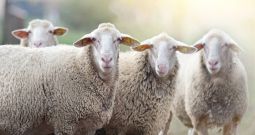
When Jesus sent forth his twelve apostle on a preaching tour, he instructed them: “Do not go off into the road of the nations, and do not enter into a Samaritan city; but, instead, go continually to the lost sheep of the house of Israel.” (Matthew 10:5,6) While the Jews as a nation did not exercise faith in Jesus, yet some among the non-Jews did. Take for example the Phoenician woman:
“And, look! a Phoenician woman from those regions came out and cried aloud, saying: “Have mercy on me, Lord, Son of David. My daughter is badly demonized.” But he did not say a word in answer to her. So his disciples came up and began to request him: “Send her away; because she keeps crying out after us.” In answer he said: “I was not sent forth to any but to the lost sheep of the house of Israel.” When the woman came she began doing obeisance to him, saying: “Lord, help me!” In answer he said: “It is not right to take the bread of the children and throw it to little dogs.” She said: “Yes, Lord; but really the little dogs do eat of the crumbs falling from the table of their masters.” Then Jesus said in reply to her: “O woman, great is your faith; let it happen to you as you wish.” And her daughter was healed from that hour on.” (Matthew 15:22-28)
In contrast to "the lost sheep of Israel" who wanted to stone Jesus for blasphemy, this Gentile woman “began doing obeisance to [Jesus],” calling him “Lord, Son of David.” Yes, she had “great faith,” as Jesus noted.
There was another occasion when a Gentile put the Jews to shame by his faith. Concerning this man, an army officer, it says, “Jesus became amazed and said to those following him: “I tell you the truth, With no one in Israel have I found so great a faith.” You can read the account in Matthew 8:5-13.
Concerning the “other sheep”, Jesus had said that “those also I must bring, and they will listen to my voice.” When did these other sheep begin to respond to Jesus' voice, and be brought into the one fold with Jesus' Jewish disciples? Did it have to wait for the distant future, 2000 years after Jesus' resurrection, namely until 1935? After his resurrection, and before his ascension to heaven to his heavenly Father, Jesus commissioned his disciples to go “and make disciples of people of all the nations, baptizing them in the name of the Father and of the Son and of the holy spirit, teaching them to observe all the things I have commanded you. And, look! I am with you all the days until the conclusion of the system of things.”
How strange his words must have sounded to his Jewish disciples, for as Peter said later to the Gentile Cornelius: “YOU well know how unlawful it is for a Jew to join himself to or approach a man of another race; and yet God has shown me I should call no man defiled or unclean. Hence I came, really without objection, when I was sent for.” Peter was “sent for” by an angel because it was the time for Jesus’ words regarding the “other sheep” to begin their fulfillment, “those also I must bring.” Therefore Peter told Cornelius: “God is not partial, but in every nation the man that fears him and works righteousness is acceptable to him.” (Acts 10:28,29,34,35)
We should understand one important fact at this point: Jehovah had always intended to turn his attention "to the nations to take out of them a people for his name." It was not dependent on whether or not the Jews remained faithful. As the apostle Paul notes: “Now the Scripture, seeing in advance that God would declare people of the nations righteous due to faith, declared the good news beforehand to Abraham, namely: 'By means of you all the nations will be blessed.'” (Acts 15:14, 18; Galatians 3:8)
Paul ― an Apostle to the Nations
Even before Peter was sent to the Gentile Cornelius and baptized him, Jesus had chosen a special apostle to “bring in” those of the nations. This was Saul, a former persecutor of the disciples, who became the zealous apostle Paul. (Gal. 2:7-9; 1 Tim. 1:12-13) Luke writes in Acts: “But the Lord said to [Ananias]: “Be on your way, because this man is a chosen vessel to me to bear my name to the nations as well as to kings and the sons of Israel.” Here, Jesus mentions the other sheep together with the existing fold that would become one flock under the one shepherd―“the nations” and “the sons of Israel.” Paul was chosen to become an apostle to the nations. (Acts 9:15; Romans 11:13)
Remember that the Jews, to whom Jesus spoke on the occasion when he mentioned the “other sheep,” had not listened to him, even accusing him of blasphemy. Would Paul be more successful? Take the example of what happened in Antioch. We are told, “When the Jews got sight of the crowds, they were filled with jealousy and began blasphemously contradicting the things being spoken by Paul. And so, talking with boldness, Paul and Barnabas said: “It was necessary for the word of God to be spoken first to you (the Jews - this fold). Since you are thrusting it away from you and do not judge yourselves worthy of everlasting life, look! we turn to the nations (the Gentiles - other sheep). In fact, Jehovah has laid commandment upon us in these words, ‘I have appointed you as a light of nations, for you to be a salvation to the extremity of the earth.” (Acts 13:45-47)
In Rome the Jews responded
similarly. Luke tells us, “They now arranged for a day with him, and they came
in greater numbers to him in his lodging place. And he explained the matter to
them by bearing thorough witness concerning the kingdom of God and by using
persuasion with them concerning Jesus from both the law of Moses and the
Prophets, from morning till evening. And some began to believe the things said;
others would not believe. So, because they were at disagreement with one
another, they began to depart, while Paul made this one comment: “The holy
spirit aptly spoke through Isaiah the prophet to your forefathers, saying, ‘Go
to this people and say: “By hearing, you will hear but by no means understand;
and, looking, you will look but by no means see. For the heart of this people
has grown unreceptive, and with their ears they have heard without response, and
they have shut their eyes; that they should never see with their eyes and hear
with their ears and understand with their heart and turn back, and I should heal
them.”’ Therefore let it be known to you that this, the means by which God
saves, has been sent out to the nations; they will certainly listen to it.”
(Acts 28:23-28)
Do not Paul’s words agree with Jesus words of John
10:16, “And I have other sheep, which are not of this fold; those also I must
bring, and they will listen to my voice, and they will become one flock, one
shepherd.” Yes,
whereas his own people rejected him as their fine shepherd, the “other sheep”
were listening to Jesus' voice and followed him. “When
those of the nations heard this, they began to rejoice and to glorify the word
of Jehovah, and all those who were rightly disposed for everlasting life became
believers.” —Acts 13:48.
Jesus had mentioned the “other sheep” in connection with identifying himself as the fine shepherd who surrenders his soul on behalf of his sheep. He said, “I am the fine shepherd; the fine shepherd surrenders his soul in behalf of the sheep. The hired man, who is no shepherd and to whom the sheep do not belong as his own, beholds the wolf coming and abandons the sheep and flees—and the wolf snatches them and scatters them— because he is a hired man and does not care for the sheep. I am the fine shepherd, and I know my sheep and my sheep know me, just as the Father knows me and I know the Father; and I surrender my soul in behalf of the sheep.” —John 10:11-15.
The sheep Jesus surrenders his soul in behalf of includes people of all the nations who exercise faith in him. As already mentioned, the apostle Paul had said, quoting from Isaiah 49:6, “I have appointed you as a light of nations, for you to be a salvation to the extremity of the earth.” Also, the apostle John writes, “And he is a propitiatory sacrifice for our sins, yet not for ours only but also for the whole world’s.” (1 John 2:2; 1 Corinthians 15:3)
Paul, a previous zealous Pharisee and persecutor of the Jewish disciples, became just as zealous in his preaching to the nations. Concerning the book of Romans that he wrote, the book All Scripture Is Inspired of God and Beneficial says:
“With Romans we begin the 14 books of the Bible that
the holy spirit inspired this former Pharisee, now a faithful servant of God, to
write. By the time he wrote Romans, Paul had already completed two long
preaching tours and was well along on the third. He had written five other
inspired letters: First and Second Thessalonians, Galatians, and First and
Second Corinthians. Yet it seems appropriate that in our modern Bibles, Romans
precedes the others, since it discusses at length the new equality between Jews
and non-Jews, the two classes to whom Paul preached. It explains a turning point
in God’s dealings with his people and shows that the inspired Hebrew Scriptures
had long foretold that the good news would be proclaimed also to the non-Jews.
"Paul, using Tertius as secretary, laces rapid argument and an astounding
number of Hebrew Scripture quotations into one of the most forceful books of the
Christian Greek Scriptures. With remarkable beauty of language, he discusses the
problems that arose when first-century Christian congregations were composed of
both Jews and Greeks. Did Jews have priority because of being Abraham’s
descendants? Did mature Christians, exercising their liberty from the Mosaic
Law, have the right to stumble weaker Jewish brothers who still held to ancient
customs? In this letter Paul firmly established that Jews and non-Jews are equal
before God and that men are declared righteous, not through the Mosaic Law, but
through faith in Jesus Christ and by God’s undeserved kindness. —si pp.
205-206 Bible Book Number 45—Romans. (Italics added)
Does the evidence not show that the "Jews: and "non-Jews", the Gentiles, really became one flock under one shepherd; and that there was no longer any distinction between the two, and that they were “equal before God?” Is that not what Jesus said would be the case regarding the "other sheep"?
The “Other Sheep” Foretold in Prophecy
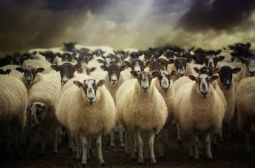
Jehovah had long ago foretold by means of his prophets that he would turn his attention to the nations: “After they quit speaking, James answered, saying: 'Men, brothers, hear me. Symeon has related thoroughly how God for the first time turned his attention to the nations to take out of them a people for his name. And with this the words of the Prophets agree, just as it is written, "After these things I shall return and rebuild the booth of David that is fallen down; and I shall rebuild its ruins and erect it again, in order that those who remain of the men may earnestly seek Jehovah, together with people of all the nations, people who are called by my name, says Jehovah, who is doing these things, known from of old."’” (Acts 15:13-18; Amos 9:11,12)
Here we have “those who remain of the men” (of the Jews) together with “people of all the nations,” (the other sheep), who would all be called by Jehovah’s name, in the “one flock” under the “one shepherd,” Christ Jesus.
Consider just a few of the many prophecies concerning the “other sheep” that Jesus would have been familiar with:
Psalm 22:27
“All the ends of the earth will remember and turn back to Jehovah. And
all the families of the nations will bow down before you.”
Psalm 47:8
“God has become king over the nations. God himself has taken his seat
upon his holy throne.”
Psalm 86:9
“All the nations whom you have made will themselves come, And they will
bow down before you, O Jehovah, And will give glory to your name.”
Isaiah 2:2
“And it must occur in the final part of the days [that] the mountain of
the house of Jehovah will become firmly established above the top of the
mountains, and it will certainly be lifted up above the hills; and to it
all the nations must stream.”
Isaiah 11:10
“And it must occur in that day that there will be the root of Jesse that
will be standing up as a signal for the peoples. To him even the nations
will turn inquiringly, and his resting-place must become glorious.”
Zephaniah 2:11
“Jehovah will be fear-inspiring against them; for he will certainly
emaciate all the gods of the earth, and people will bow down to him,
each one from his place, all the islands of the nations.”
Haggai 2:7
“‘And I will rock all the nations, and the desirable things of all the
nations must come in; and I will fill this house with glory,’ Jehovah of
armies has said.”
Zechariah 8:23
“This is what Jehovah of armies has said, ‘It will be in those days that
ten men out of all the languages of the nations will take hold, yes,
they will actually take hold of the skirt of a man who is a Jew, saying:
“We will go with YOU people, for we have heard [that] God is with YOU
people.”’”
Isaiah 49:6
And he proceeded to say: “It has been more than a trivial matter for you
to become my servant to raise up the tribes of Jacob and to bring back
even the safeguarded ones of Israel; I also have given you for a light
of the nations, that my salvation may come to be to the extremity of the
earth.”
And at Galatians 3:8 Paul draws attention to the fact that God always had the nations in mind when he made the covenant with Abraham: “Now the Scripture, seeing in advance that God would declare people of the nations righteous due to faith, declared the good news beforehand to Abraham, namely: “By means of you all the nations will be blessed.”’
Consider the above scripture of Isaiah 49:6, the one Paul was quoting earlier. Who is the foretold “servant” spoken of there? The Watchtower of December 15, 1998, on page 19, says: “In further fulfillment of Isaiah’s prophecy, Jehovah gave his 'servant' Jesus as 'a light of the nations, that [God’s] salvation may come to be to the extremity of the earth.'” (Isaiah 49:6, 8)
The Watchtower identifies Jesus as that servant who would be the one to not only “raise up the tribes of Jacob and to bring back even the safeguarded ones of Israel,” but would also be “a light of the nations, that [God’s] salvation may come to be to the extremity of the earth.” Is that not what Jesus was referring to at John 10:16? Isaiah 49:6 foretells the bringing in of the “other sheep?” (compare also Isaiah 42:1- 4,6,7; Matthew 12:18-21) That is why he commissioned his Jewish disciples to make disciples of people of all the nations. It is to these prophecies, besides many others, that Jesus was referring when he said, “I have other sheep (the Gentiles), which are not of this fold (the Jewish fold); those also I must bring, and they will listen to my voice, and they will become one flock, one shepherd.” Developments within a short three and a half years of his death and resurrection prove that the fulfillment of his words started at that time.
The “Other Sheep” and the Heavenly Calling
Cornelius was the first non-Jew―of the “other sheep”―to be chosen as one who would rule with Jesus in his kingdom of the heavens. He was the first of the wild branches (Gentiles) to be grafted into the domestic olive tree (Jews). Jehovah, in making his covenant with Abraham, had originally purposed that the members of the 144,000, who would rule with Jesus in his heavenly kingdom would be chosen entirely from among Abraham's offspring. Since the Jews as a nation rejected the Messiah, and refused to be born again into the new covenant, Jehovah determined to replace many of the natural Jewish branches of this holy tree and graft in in their place wild gentile branches. The original tree did not become something different because of it, for as the apostle Paul explains, if the root of the tree is holy, so are its branches. Hence, some of the “other sheep” are among those who will rule with Christ in his heavenly kingdom. (Exodus 19:5-6; Romans 11:13-24; 1 Peter 2:9-10; Revelation 1:6; 14:1-4)
The apostle Paul explains clearly the matter regarding the "other sheep" in his letter to the Gentile disciples in Ephesus:
“Therefore keep bearing in mind that formerly YOU were people of the nations as to flesh; “uncircumcision” YOU were called by that which is called “circumcision” made in the flesh with hands — that YOU were at that particular time without Christ, alienated from the state of Israel and strangers to the covenants of the promise, and YOU had no hope and were without God in the world. But now in union with Christ Jesus YOU who were once far off have come to be near by the blood of the Christ. For he is our peace, he who made the two parties one and destroyed the wall in between that fenced them off. By means of his flesh he abolished the enmity, the Law of commandments consisting in decrees, that he might create the two peoples in union with himself into one new man and make peace; and that he might fully reconcile both peoples in one body to God through the torture stake, because he had killed off the enmity by means of himself. And he came and declared the good news of peace to YOU, the ones far off, and peace to those near, because through him we, both peoples, have the approach to the Father by one spirit.” (Ephesians 2:11-18
It is to them, the Ephesians, who
“were people of the nations...without Christ, alienated from the state of
Israel and strangers to the covenants of the promise,” that Paul writes, “and he
raised us up together and seated us together in the heavenly places in union
with Christ Jesus.” (Ephesians 2:6) Therefore, it is clear that the “other
sheep,” people of the nations, are among those who are seated with the natural
Jewish apostles and disciples in the heavenly places; for Christ reconciled both
folds of peoples in one body to God, thus making them one flock under one
shepherd.
John 10:16
A comparison of John 10:16 with supporting
scriptures:
"And I have other sheep,
which are not of this fold...
“YOU were people of the nations as to flesh;...without Christ,
alienated from the state of Israel and strangers to the covenants of the
promise” (Ephesians 2:11,12)
"those also I must bring...
“this man is a chosen vessel to me to bear my name to the nations” (Acts 9:15)
“Now I speak to YOU who are people of the nations. Forasmuch as I am, in
reality, an apostle to the nations” (Romans 11:13)
“But now in union with Christ Jesus YOU who were once far off have come to be
near by the blood of the Christ.” (Ephesians 2:13)
"and they will listen to my voice...
“When those of the nations heard this, they began to rejoice and to glorify the
word of Jehovah, and all those who were rightly disposed for everlasting life
became believers.” (Acts 13:48)
“the means by which God saves, has been sent out to the nations; they will
certainly listen to it.” (Acts 28:28)
"and they will become one flock,
one shepherd.
“There is neither Jew nor Greek, there is neither slave nor freeman, there is
neither male nor female; for YOU are all one [person] in union with Christ
Jesus.” (Galatians 3:28)
“For there is no distinction between Jew and Greek, for there is the same Lord
over all, who is rich to all those calling upon him.” (Romans 10:12)
“By means of his flesh he abolished the enmity, the Law of commandments
consisting in decrees, that he might create the two peoples in union with
himself into one new man and make peace; and that he might fully reconcile both
peoples in one body to God...through him we, both peoples, have the approach
to the Father by one spirit “ (Ephesians 2:15,16,18)
Jesus is the shepherd of this one
flock.
“Now may the God of peace, who brought up from the dead the great shepherd of
the sheep with the blood of an everlasting covenant, our Lord Jesus, equip YOU
with every good thing to do his will, performing in us through Jesus Christ that
which is well-pleasing in his sight...” (Hebrews 13:20)
“For YOU were like sheep, going astray; but now YOU have returned to the
shepherd and overseer of YOUR souls.” (1 Peter 2:25)
“because the Lamb, who is in the midst of the throne, will shepherd them, and
will guide them to fountains of waters of life.” (Rev. 7:17)
Summary
The scriptures nowhere indicate that Jesus was making a distinction
between two hopes or destinies when he referred to the “other
sheep.” There are no parallel scriptures to support that conclusion,
as there are concerning its fulfillment in connection with the
Gentiles, people of the nations. As already mentioned, in view of
who he was addressing, that would have been unreasonable. Rather
than differentiating between the two hopes, as we do, the scriptures
speak of the “one hope,” just as there is only “one body, one spirit, one Lord, one faith, one baptism, one God and
father of all,” and we might add “one flock.” (Ephesians 4:4,5)
The “one hope” we all share is that “Christ died for us [and we] have been declared righteous now by his blood ... saved through him from wrath” and have become “reconciled to God through the death of his Son, ... and shall be saved by his life.” (Romans 5:8-10) As Paul writes: “For I am not ashamed of the good news; it is, in fact, God’s power for salvation to everyone having faith, to the Jew first and also to the Greek.” (Romans 1:16) The one hope, the one good news we preach, is as Jesus said at John 3:16, that “God loved the world so much that he gave his only-begotten Son, in order that everyone exercising faith in him might not be destroyed but have everlasting life.” How Jehovah will go about blessing “everyone exercising faith in him,” and how all creation “will be set free from enslavement to corruption,” is just a detail, not a separate hope. (Romans 8:19-22)
Part of that detail is that Jehovah has chosen a limited number, a little flock, “joint heirs with Christ,” to rule with his Son in his kingdom, the “administration” by means of which he will “gather all things together again in the Christ, the things in the heavens and the things on the earth.” (Luke 12:32; Romans 8:17; Ephesians 1:10) He started the choosing with the twelve apostles, all of whom were Jews, and continued to add to them, so that at Pentecost there were 120 who received the outpouring of the holy spirit. Three and a half years later the first one of “the other sheep,” Cornelius, was added to that number, for Jehovah no longer made a distinction between the Jews and people of the nations. They had become one flock under the same shepherd, as Jesus had promised. That God would turn his attention to the nations should not have been a surprise to the Jews, for God’s promise to Abraham included blessings for “all nations.” (Genesis 22:18)
The identity of the “Other Sheep” is critical in understanding their relationship with Jesus and Jehovah, as they recognize that Jesus is their mediator, and they are declared righteous on account of their faith in the ransom sacrifice. These ones are also included in the New Covenant, and are not merely observers. They are reconciled to Jehovah God as his sons and daughters. (Rom. 5:6-11; Mal. 3:17,18; 2 Cor. 6:18; Gal. 3:26)
Although some of the “other sheep” have been chosen by God to rule with Christ in his heavenly kingdom, the vast majority will share in transforming this earth into the paradise God meant it to be. Among them will be God's faithful men and women of old, whose faith Paul describes in the book of Hebrews, chapter 11.
He said, "You can see now
how it is written that the Messiah suffers, rises from the dead on the
third day, and then a total life-change through the forgiveness of sins
is proclaimed in his name to all nations--starting from here, from
Jerusalem!"
―Luke
24:46,47 (MSG)
Basic Web Design © 2004 Perimeno